


Automotive and Transportation Blog
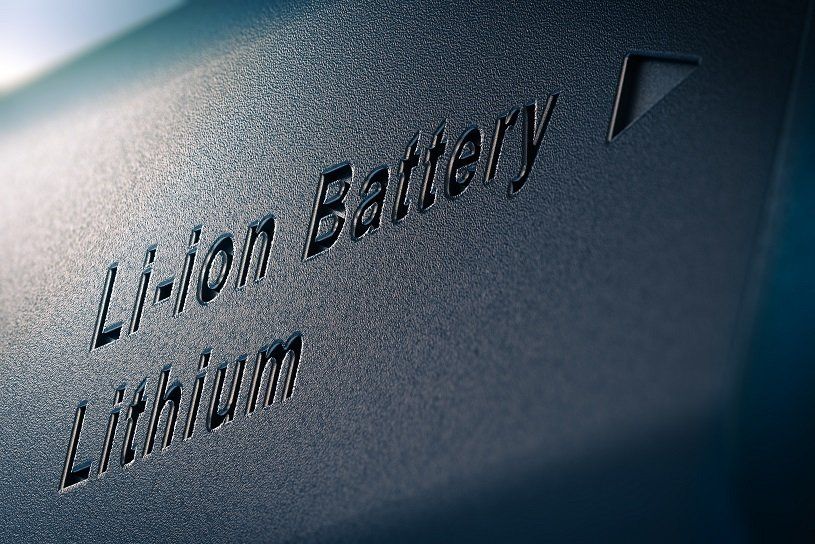
The global lithium market is emerging at a rapid rate with the potential to be worth hundreds of billions dollars in future years. Many believe that lithium will play a key role in emerging clean energy technology like electric vehicles. Australian exports of spodumene ore, which is the precursor to lithium, are expected to grow from $780 million to $1.1 billion by 2020, accounting for more than 80% of the world’s hard rock lithium supply. Lithium is driving the electric vehicle boom Demand for lithium is being driven by demand for lithium-ion batteries. While consumer electronics have used lithium-ion batteries for years, their usage is now taking off thanks to the growth in electric vehicles and large battery storage units. As eco-friendly vehicles have become more popular, they’ve also helped quadruple the price of lithium in the past four years. While the largest opportunities currently lie in the mining and construction industries, there is potential for Australia to vertically integrate its investments in lithium by also manufacturing high-grade battery materials. This will require both manufacturing and technical skills as well as significant investment and has the potential to add significant value to the Australian economy. The first step is underway, with a processing plant that crushes and processes rocks into spodumene concentrate already in operation . Lithium Australia is one company that has been developing a superior processing technology that extracts lithium from silicate. This technology has the potential to reduce capital and operating costs in the processing of lithium while producing a higher quality product. Such technology provides the opportunity for Australia to not only mine the rocks but also expand its manufacturing base, vertically integrating the lithium industry here. The new mining boom boosts demand in multiple sectors Australia is well-placed to take advantage of this growing industry thanks to its experience in managing mining operations, experienced skill base and geology. There are already several new operations underway, with five lithium hydroxide refineries under construction or planned in WA alone. Just four years ago 400 people were employed in lithium mines in WA, now there are over 2,600 people employed. Whether Western Australia will become the Lithium Valley of the world or not is yet to be seen, but there are significant opportunities for businesses, employers and those with the right skills to benefit today and into the future. It’s estimated that the lithium industry could generate over 100,000 new jobs in Western Australia by 2025. Potential job opportunities abound for those involved in mining, technical production, manufacturing and the construction of industrial and residential infrastructure. Take advantage of these opportunities by partnering with an agency that understands your business’ needs.

Here we speak to Senior Recruitment Consultant Wen Shan, who has over 22 years’ experience working within and for Australia's automotive industry.
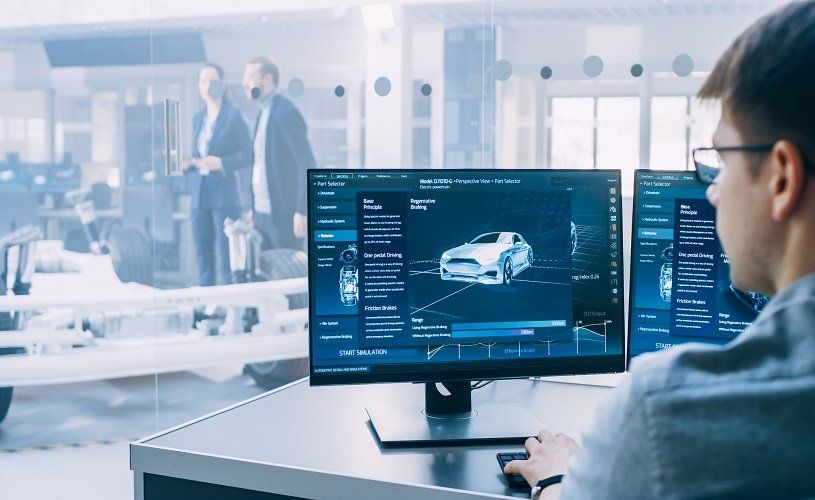
Electric Vehicle sales tripled in Australia last year. Here's how employers in the automotive and emerging tech space can make the most of this.

Automotive car prices and sales have been up and down throughout the pandemic, so how is this impacting the industry?

If you’re looking to enter into a new role or transition back into the workforce, here are five benefits that might make a role in automotive customer service a great opportunity for you.
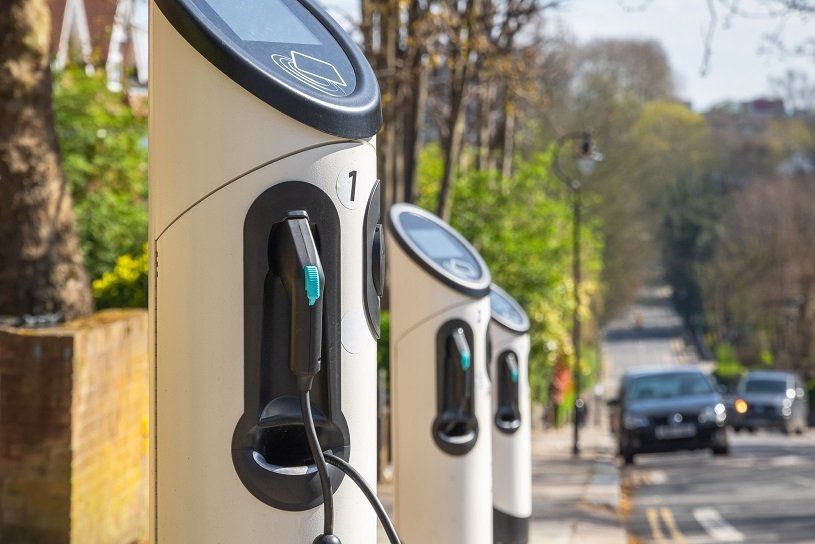
We discuss how automotive organisations can look to Electric Vehicles and emerging automotive technology to help drive the automotive industry forward.

As major industry players turn to augmented reality in their search for a competitive edge, here’s what’s to come in the world of automotive AR.

The role of a car salesperson attracts many candidates, from keen automotive enthusiasts to those who thrive in a sales-focused environment. And while you don’t necessarily need a tertiary education or degree to be a car salesperson, there are a certain set of skills that Bayside Group Automotive’ s recruitment experts have identified as being incredibly helpful when hoping to be hired for this role. Not only this, these skills will also aid in your career success and allow you to become an asset to your employer. Good communication skills Perhaps the most critical of all when it comes to presenting yourself as a good car salesperson is possessing excellent communication skills. Communication means much more than simply talking, telling or explaining; it involves active listening that allows you to comprehend the specific needs of each customer, reading and managing body language, conveying often technical information in a digestible way and adjusting your tone of voice. During your interview, it is important to demonstrate your aptitude for communication while in conversations with the hiring manager. This will help to position you as an employee who is capable of appealing to a broad customer base and will be able to authentically connect with clients, which will often translate into a sale. Adaptability It is important for every car salesperson to be adaptable, as each customer will require a different style of interaction. You should be able to modify your methods of communication and sale propositions based on someone’s budget, opinions and different needs. No matter what someone’s background or demographics, you should be able to acclimate yourself in such a way that allows you to build rapport and relate to anyone who walks into the car dealership. Adaptability isn’t just limited to your customers either. The Australian automotive industry has undergone many changes over the last decade, and will continue to do so over time. It is important that you are able to stay atop of new developments, products and technologies, as well as colleagues and managers, that you will be expected to work with. Positive attitude A positive attitude about your dealership, product and position will take you a long way when it comes to being successful in this role. No matter how experienced you may be, or how excellent your selling methods are, if you approach a potential customer with a bad attitude, lack of enthusiasm and grumpy demeanour you’re unlikely to make a sale. A positive attitude, especially in the face of setbacks, won’t only make you instantly more likable to your customer base, but will also make you more appealing to a potential employer. If they believe you can tackle challenges in the role head on and with a good attitude you are much more likely to land the job! Understanding financials Purchasing a car is a big investment for most people, so it is important that as a car salesperson you offer realistic guidance that is based on a good understanding of finances. In addition to this, the ability to work out prices and finance details relatively quickly will be of significant interest to potential employers, as it indicates that you would be able to provide real-time information for clients, thus making the sales process much more efficient. Good persuasion Another highly important skill when it comes to proving your worth as a successful car salesperson is by possessing the art of persuasion. This doesn’t mean hoodwinking your customer into buying a product that doesn’t suit them, but instead will allow you to gently position the product as ideal for them after correctly identifying it as their best choice. An employer will want to see that you can paint an irresistible picture of the product and reassure those who are hesitant with a few well-chosen words of wisdom. If you are looking for a job in the area of automotive sales, get in touch with our experts today.

Working in a car dealership brings with it a wide array of job opportunities and carries many benefits. Not only are there opportunities for career progression, competitive salary packages and the chance to work with like-minded people, but you have the chance to act as the link between car manufacturers and their customers. This makes this area of work ideal for those who have a passion for the automotive industry but are also interested in delving into the business, management and sales aspects of the industry. If you’re looking at moving into the car industry, but aren’t sure where to start, here are 6 areas within the dealership space that could be the perfect fit for you. 1. Sales Working as an automotive salesperson will require you to be the face of the dealership you work for, seeing you responsible for the majority of the communication with customers. Being a salesperson doesn’t just require you to bring in money for the business, but also asks that you have excellent product knowledge and comprehension skills, so you are able to best assess a customer’s needs and recommend vehicles accordingly. You will also need well developed communication skills, be very personable and persuasive – without being pushy or aggressive. 2. Sales Management The sales manager is responsible for managing the sales staff, approving car deals, and determining the value (to the dealership) of cars that are traded in. In some instances, they can also be the person who buys and sets the prices on the cars. In this role you would be expected to coach and encourage your team, so as to ensure they are meeting quotas and targets that have been laid out. 3. Dealership office and administration This area of the industry puts you at the helm of a dealerships day-to-day functions and includes roles such as an office manager, executive assistant, receptionist or an accounts payable/receivable clerk. These roles vary significantly, with some having more client-focused responsibilities, while others will be responsible for the financial paperwork involved in running a dealership. It takes strong business minded individuals who like working with people or is comfortable with numbers to work in this field. 4. Service department Many dealerships have their own service department with service technicians who help to ensure that customers keep coming back to the dealership for maintenance and repairs. Most service departments have a manager who schedules and leads the other employees, which could include technicians, appointment setters and shuttle drivers. Today, service technicians must be trained in car mechanics, as well as electronics and computers. In today’s fast paced automotive world, certified technicians must continue to maintain their skills and stay on top of changes in the industry. 5. Parts department If you work at a franchised dealership, chances are there will be a parts department from which customers can purchase parts from the specific car brand rather than aftermarket sellers. Those working in the parts department will likely work hand-in-hand with the service department, and would predominantly be responsible for ordering, managing inventory and distributing parts to technicians and the public. 6. Marketing and communications Managing the marketing and communications of a dealership is an ideal role for those who either have strong communications skills, or else have a specific degree or experience in this area. This area could see you working as a social media manager, website administrator or digital marketing manager depending on the size and needs of a particular dealership. It is a role that will likely see you in charge of promotions, campaigns and both digital and print marketing material, which can be used in-store by the salespeople. If you’re interested in entering into the automotive space, contact us today. Our specialist consultants can provide opportunities with some of the biggest, best and most career-rewarding automotive brands. Alternatively, if your car dealership is looking for opportunities to increase efficiency and profits, or access motor dealer-only wholesale stock, visit Motor Dealer Xchange .

The automotive industry has come a long way in recent years, seeing the modern day car able to do far more than simply drive and park. Automotive manufacturers are now working hand-in-hand with tech companies to redefine the way cars are manufactured, operated and maintained, seeing them become large smart devices with the likes of advanced emergency braking capabilities, mapping technology for autonomous driving and better fuel efficiency. All of this spells good news for Australia’s automotive industry, with such developments resulting in more job opportunities for skilled automotive technicians and those willing to upskill themselves in the area of automotive technology. In fact, the number of people working as motor mechanics has grown strongly over the past five years, with an expected 23,000 job openings over the coming five years, and many transitioning into the role of skilled technicians. Here are four areas of automotive technology that are changing the face of the industry, making it an exciting and engaging industry to work within. Self-driving and autonomous technology While we’re still quite a way from widely adopting completely self-driving cars, a number already have semi-autonomous driver-assisted technologies. These include automatic-braking sensors, motorway lane sensors, mapping technology that monitors blind spots, cameras in the back and front of a car, adaptive cruise control and self-parking capabilities. Nowadays, many modern cars feature autonomous systems like Autonomous Emergency Braking , which use radar, cameras and lidar technology to assess the road ahead and work out potential collisions. Audi’s adaptive cruise control employs 30 control units to analyse its surrounding environment to regulate the speed according to distance between itself and the vehicle ahead, while a BMW 7 series currently on the market has the capability to park itself without driver intervention. Even multinational technology company Google has jumped on board, recently revealing its self-driving pod ‘ Waymo ’. Cars go 3-Dimensional German multinational engineering and technology company Bosch is working on digital dashboard technology that could make three-dimensional displays a reality. Aimed at improving safety by making critical alerts stand out from regular dashboard notifications, this kind of technology could be used to better show owners where their car is in relation to obstacles. This kind of technology also paves the way for easier navigation for drivers. Currently an in-car GPS can typically show a 3D perspective on a flat display, however a true 3-D display could make pinpointing your exact location – and which direction to take next – more understandable. Greater car connectivity As computers have become more central to the mass production of automobiles, the capacity for user interactivity has increased enormously. Today, every car produced has some kind of onboard computer that controls a wide range of functions. However some car manufacturers are taking this one step further. For those who are wanting to browse the internet, Tesla is deploying an over-the-air software update that will allow drivers to surf the web on a large dashboard screen when the car is in park. Fuel efficient rides In 2016, more than 2 million electric vehicles were sold worldwide, and this number is expected to grow in the near future as more automotive manufacturers embrace electric vehicle technology to their fold. This has predominantly been brought on by growing consumer demand for cars that are more environmentally friendly and cost efficient. At the front of this fuel-efficiency movement is Tesla, which has released a slew of electric and hybrid vehicles that can take you for hundreds of kilometres with a single charge. Companies such as VW and General Motors have recently unveiled electric cars to their fleet, while Volvo has stated that all of the its engines will be equipped with an electric motor by the end of 2019. The rise of electric cars has also made them more financially accessible, with more affordable hybrid cars priced under $30,000 being released by the likes of Toyota, Kia and Honda, suggesting that investing in fuel efficiency may soon be widely adopted around the globe. If you’re looking to work within the exciting and developing automotive industry, contact us today and one of our consultants can assist with your needs.